The Web Is About to Break — And You're Going to Feel It


The web didn't fall because Google was strong.
It fell because everyone else acted like resistance was impossible.
For years, Chrome has been treated like gravity.
A force of nature.
Something you simply accept.
Web developers didn't necessarily follow Google because they loved Chrome. They followed because Chrome became so dominant that ignoring it could mean breaking a website for an enormous percentage of their users.
That fear became obedience.
Obedience became inertia.
Inertia became concentration.
And concentration gave one company enormous influence over the technology sitting between billions of people and the internet.
Now we're seeing one of the consequences.
Manifest V3.
And if you think that's just some boring technical change that affects programmers and ad-blocker enthusiasts, you're missing the bigger story.
Because this isn't really about advertisements.
It's about who gets to decide what your browser is capable of stopping.
First, Forget the Jargon
Let's get one thing out of the way.
Manifest V3 isn't simply “the thing that kills ad blockers.”
That's too simplistic.
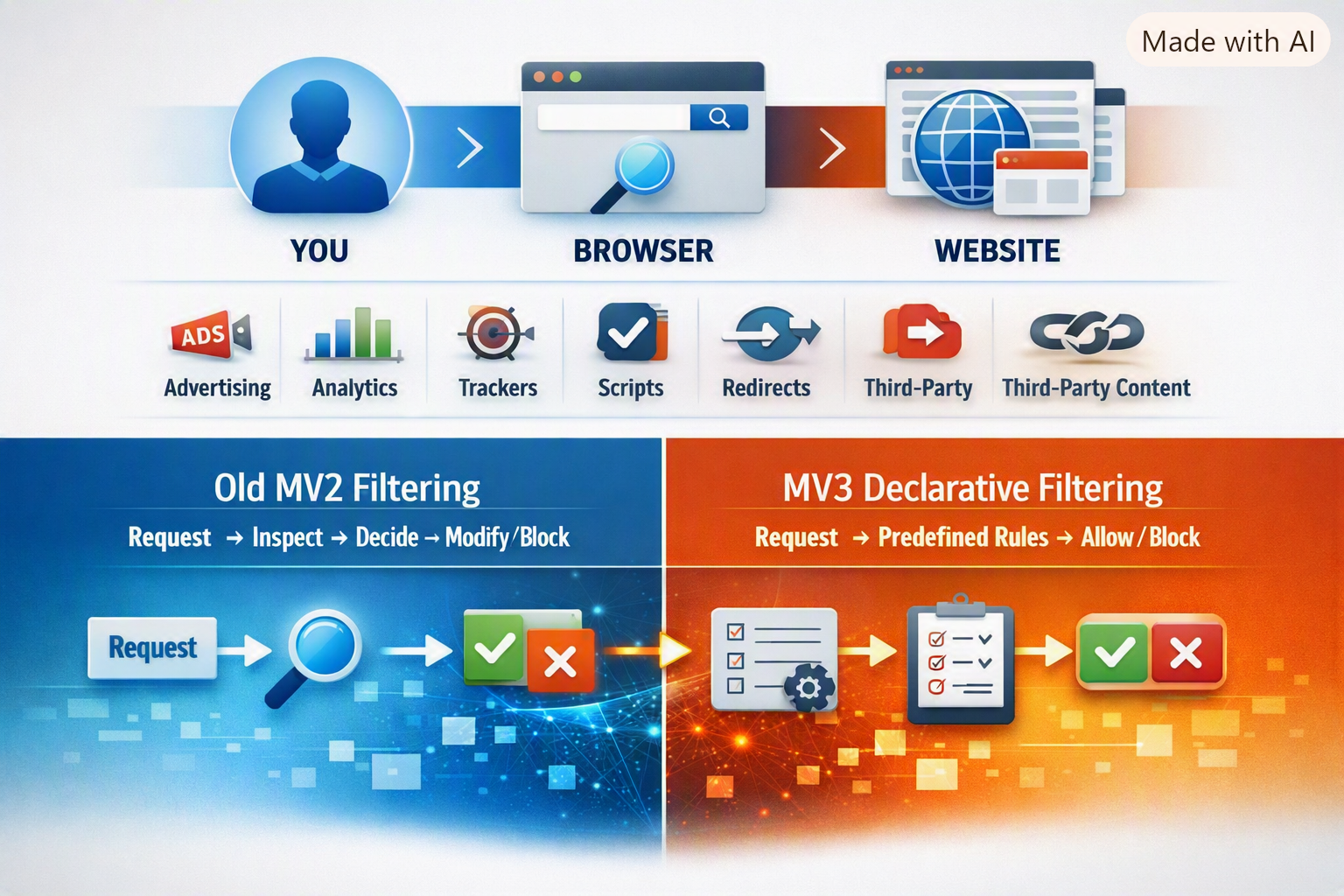
Google designed MV3 as a new extension architecture, arguing that it improves security, privacy and performance. Among other changes, it replaces much of the old, highly flexible webRequest model with a more declarative approach based around declarativeNetRequest.
That distinction sounds like something only a developer could care about.
But here's the plain-English version:
Your browser extensions have less freedom to react dynamically to what a website is doing.
And that matters.
Because a modern content blocker isn't merely a digital version of the “Do Not Disturb” sign.
A sophisticated blocker can act as a security and privacy layer between you and the web.
It can help deal with:
- intrusive advertising
- tracking
- pop-ups and popunders
- unwanted redirects
- malicious advertising
- scammy page elements
- anti-adblock scripts
- fingerprinting
- cryptocurrency miners
- unwanted scripts
- malicious domains
- third-party tracking infrastructure
That is why calling uBlock Origin “an ad blocker” undersells what it actually does.
It's a filtering engine.
And for millions of people, it is part of their browser's defensive perimeter.
Your Browser Has an Immune System
Think about your immune system.
You encounter things every day that you don't want inside your body.
Your immune system identifies them, blocks them, destroys them or prevents them from causing damage.
Your browser has an imperfect equivalent.
Every time you visit a website, your browser may encounter:
JavaScript.
Advertising networks.
Tracking scripts.
Third-party domains.
Redirects.
Embedded content.
Downloads.
Authentication requests.
Fingerprinting attempts.
Some of that is legitimate.
Some of it isn't.
And some of it is simply unwanted.
A powerful content blocker gives the user another layer of control over that activity.
That layer doesn't make you invulnerable.
It doesn't replace operating-system security.
It doesn't replace backups.
It doesn't make clicking every giant flashing “DOWNLOAD” button a good idea.
But it is another layer.
And security is built from layers.
The Browser Immune System

So What Actually Changes With MV3?
This is where things get technical.
And it is also where the argument becomes more interesting.
Manifest V3 gives extensions a declarative system for specifying network-blocking rules. Instead of an extension having unrestricted freedom to examine and react to every request in the same way it could under the older model, much of the filtering has to fit within rules the browser can enforce.
That has legitimate benefits.
A more constrained extension environment can reduce the amount of privileged code extensions are allowed to run and can improve reliability and resource usage in some circumstances.
But there is a trade-off.
You lose flexibility.
And flexibility is exactly what sophisticated content filtering sometimes needs.
The creator of uBlock Origin, Raymond Hill, maintains a separate MV3 version called uBlock Origin Lite.
He is remarkably explicit about the distinction.
uBO Lite is not intended to be an automatic replacement for the original uBlock Origin. Its filtering model is different, and some capabilities of full uBO cannot be ported to MV3.
That's not a conspiracy theory.
It's an architectural difference.
No, uBlock Origin Lite Isn't “Fake”
This is worth saying because the internet has turned this discussion into a binary argument.
uBlock Origin Lite works.
It can block advertising and trackers.
It can apply cosmetic filtering and scriptlet-based filtering in its more permissive modes.
For many ordinary websites, an average user may notice little or no difference.
Even its developer describes uBOL as a reliable, efficient MV3 content blocker — while acknowledging that it sacrifices capabilities found in full uBO.
So calling uBOL useless would be wrong.
But calling it identical to uBlock Origin would also be wrong.
That's the important distinction.
Full uBlock Origin has capabilities that depend on APIs and privileges that aren't equivalently available under the MV3 model.
On Firefox, for example, uBO can perform HTML and response-body filtering through APIs that aren't available in the same way elsewhere. Its developer also documents advantages around filtering at browser launch, prefetching and other areas.
The question isn't:
“Does MV3 allow ad blocking?”
It does.
The question is:
“Does MV3 preserve the full range of dynamic filtering and user control that sophisticated blockers previously had?”
The answer is no.
And that's the part worth paying attention to.
Why Should Anyone Other Than a Nerd Care?
Because the web isn't getting less complicated.
It's getting more complicated.
Websites increasingly depend on dozens — sometimes hundreds — of third-party resources.
Advertising is increasingly automated.
Tracking is increasingly sophisticated.
Scammers are increasingly professional.
Malvertising remains a real threat.
And ordinary users are not equipped to distinguish between:
“Your download is ready!”
and
“Congratulations! You've just clicked something you absolutely shouldn't have.”
They shouldn't have to be.
That's why defensive layers matter.
The average person doesn't need to understand DNS.
They don't need to understand JavaScript.
They don't need to know what webRequest or declarativeNetRequest means.
They just need their browser to be on their side.
What Your Browser Sees
Why Developers Didn't Fight Back
This part is less technical.
And perhaps more important.
Developers didn't necessarily wake up one morning and say:
“Manifest V3 is fantastic! Let's all use it!”
Many developers simply looked at the market.
Chrome has an enormous user base.
If you are building a browser extension, you need users.
If you are building a website, you need it to work in Chrome.
If Google changes the rules, ignoring those rules isn't free.
You can fight.
Or you can adapt.
And most companies adapt.
That's not stupidity.
It's economics.
The problem is what happens when everyone independently makes the rational decision to follow the same dominant platform.
Collectively, those decisions create something nobody necessarily intended:
dependency.
That's how platform monopolies work.
They don't always need to force everyone to agree.
They simply need to make disagreement expensive.
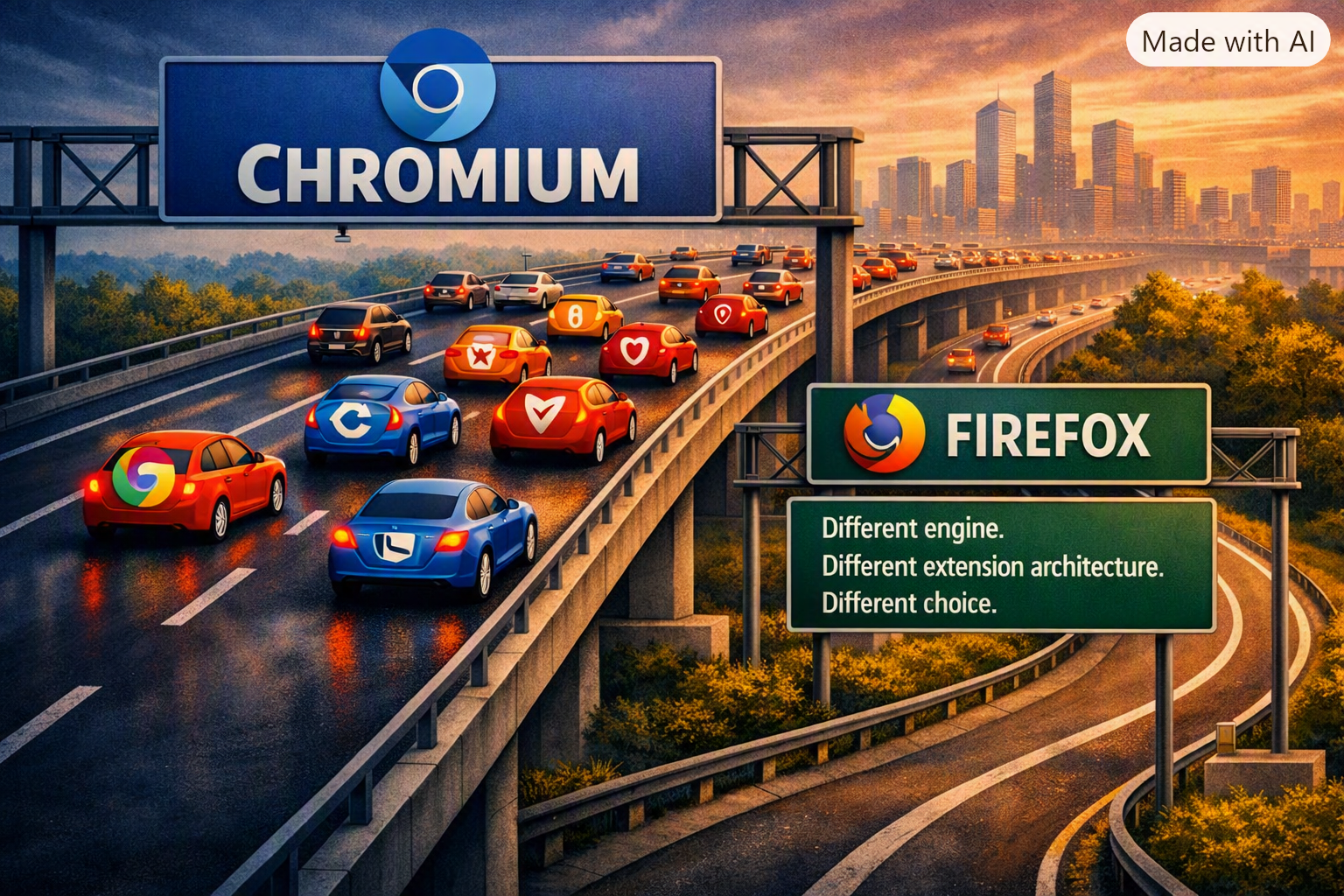
Different Browser Logos Don't Always Mean Different Foundations
This is another thing ordinary users rarely realize.
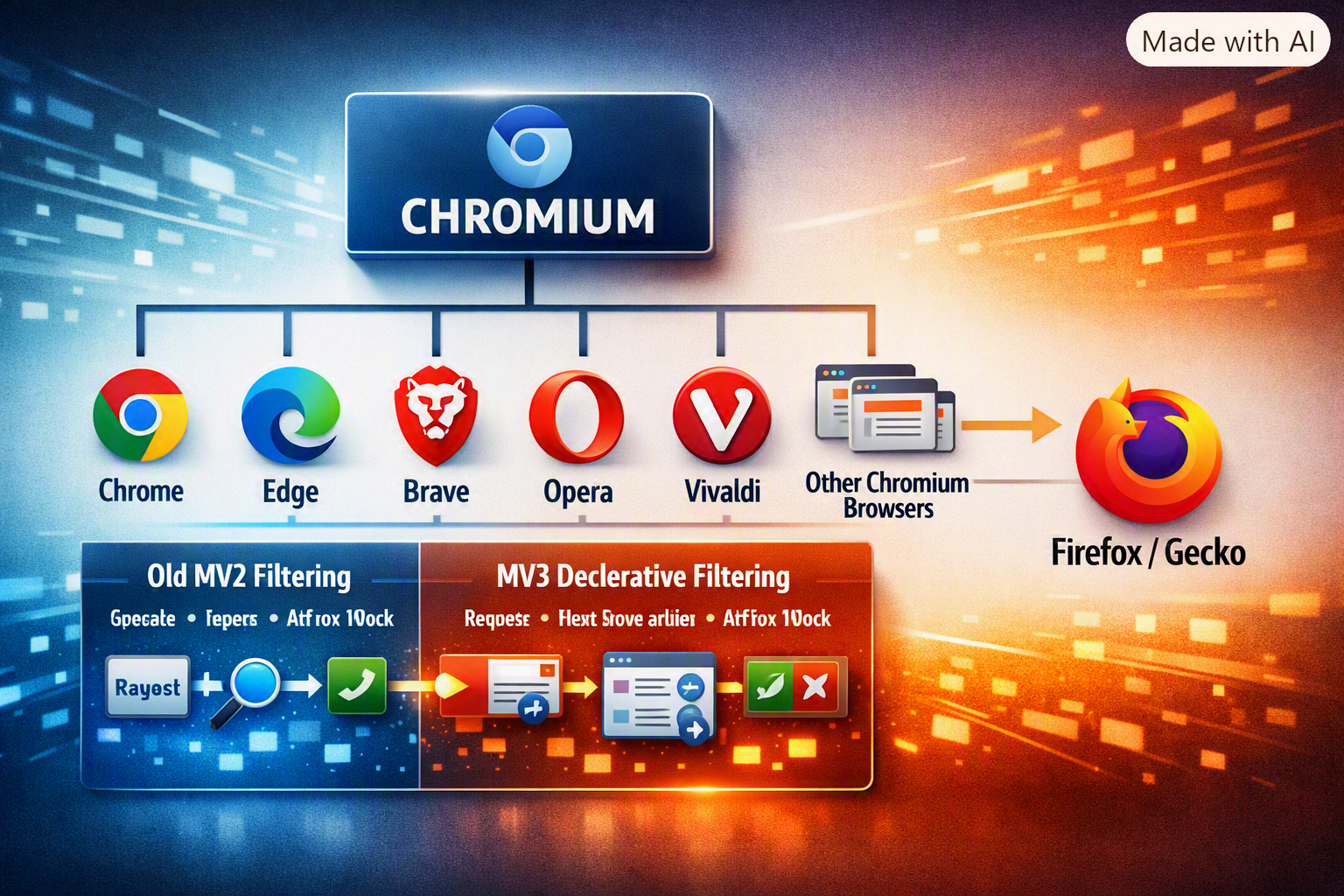
Chrome is Chromium.
Edge is Chromium.
Brave is Chromium.
Opera is Chromium.
Vivaldi is Chromium.
And there are many more.
That doesn't mean those browsers are identical.
They aren't.
They can have radically different interfaces, privacy settings, policies and features.
But they share a common underlying foundation.
And when that foundation changes its extension architecture, the change can ripple through a huge portion of the browser ecosystem.
Microsoft Edge is now joining the transition. Microsoft announced in August 2026 that Edge had begun its consumer transition away from MV2, with the goal of completing the consumer transition by the end of 2026.
This is no longer some theoretical future scenario.
The transition is happening.
The Chromium Family
The Pain Hasn't Hit Everyone Yet
For technical users, this can still feel like a nerd problem.
You can install another browser.
You can configure extensions.
You can read documentation.
You can change filter lists.
You can understand what happened when something breaks.
Most people can't.
And they shouldn't need to.
They simply want to click a link and get the page they asked for.
They want to search for a recipe without being ambushed by three new tabs.
They want to download a PDF without playing “Which button is the real download button?”
They want their browser to behave like a tool.
Not like a casino.
And when the web becomes more hostile, the people who suffer most are usually the people least equipped to defend themselves.
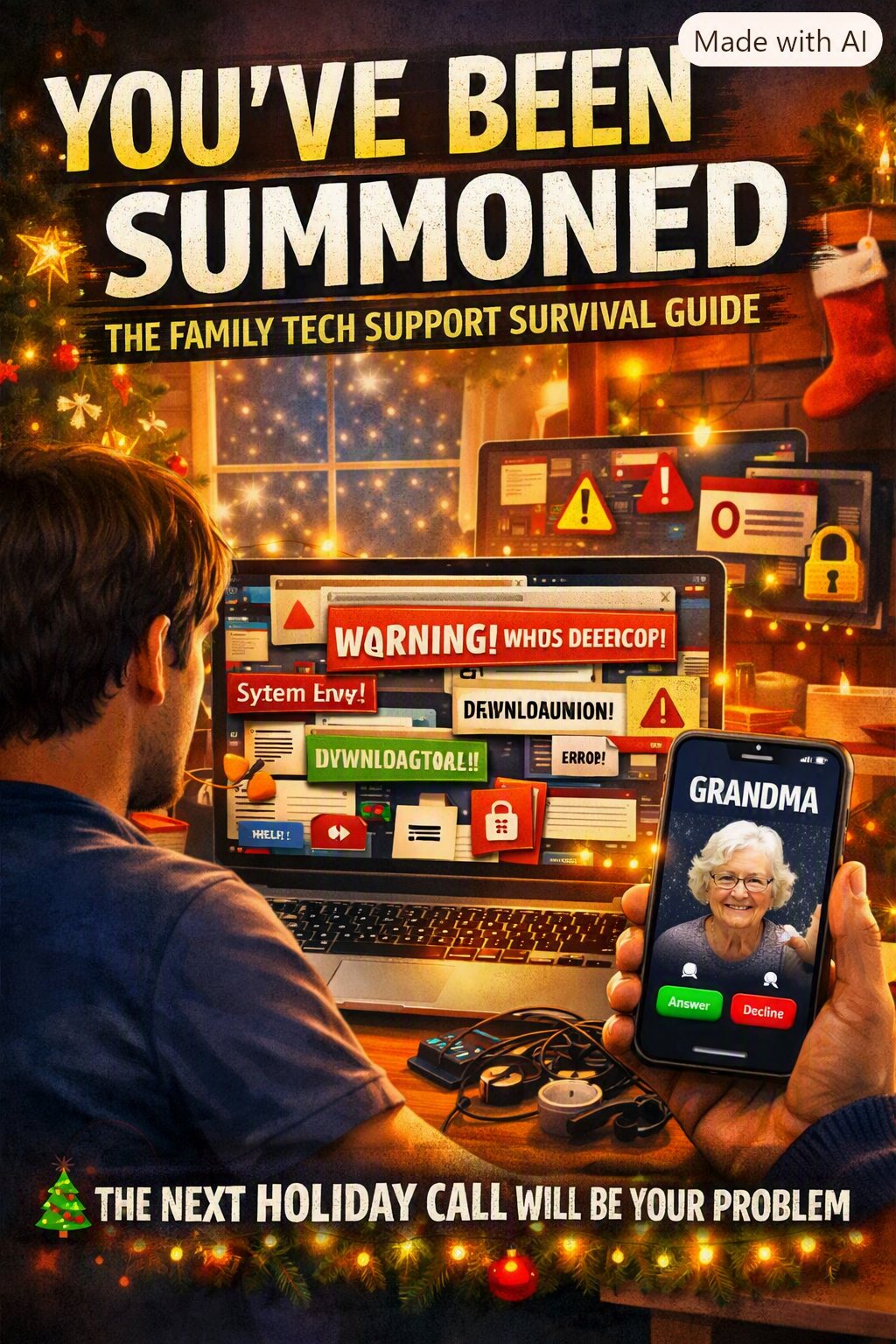
This Is Where Your Grandma Comes In
Picture this.
Your grandmother buys a cheap laptop.
She uses Chrome because that's what came with the machine.
She searches for a recipe.
She finds a promising result.
She clicks it.
A new tab opens.
She closes it.
Another window appears.
She clicks what appears to be the download button.
It isn't.
She gets a warning.
Then another.
She calls you.
“Something's wrong with my computer.”
Now let's be responsible here.
MV3 does not guarantee this scenario.
A malicious advertisement can exist regardless of MV2 or MV3.
Modern browsers still have extensive security protections.
A content blocker has never been a substitute for operating-system updates, strong authentication, backups or sensible security practices.
But every security system is about layers.
And if one of those layers becomes less capable, that's worth understanding.
Because when something goes wrong, your grandmother isn't going to ask:
“Did declarativeNetRequest have enough rules?”She's going to ask:
“Can you fix my computer?”
The Call

And Techies? This Will Hit You Too.
You're not immune.
You're just the one who gets blamed.
At Thanksgiving.
At Christmas.
At the family barbecue.
At someone's birthday.
Someone will quietly pull you aside.
“Hey...”
“Do you know why my browser keeps opening weird websites?”
“My computer has become really slow.”
“I keep getting these strange messages.”
“Can you take a look?”
And congratulations.
You've just been promoted to Family IT Department.
No salary.
No support contract.
No SLA.
Just Christmas dinner and a laptop covered in questionable browser extensions.
The Escape Hatch Is Firefox
There is an important point here that sometimes gets lost in the outrage:
There is an alternative.
Firefox isn't Chromium.
It has its own browser engine.
It has its own extension platform.
And it remains the environment where uBlock Origin's developer says the extension works best.
That matters for reasons beyond ad blocking.
Browser diversity is valuable because different browser engines mean different technical power structures.
If Chrome changes something you don't like, a different Chromium browser may not give you an escape from the underlying architecture.
Firefox can.
That doesn't make Firefox perfect.
It doesn't mean every Firefox user is magically safe.
It doesn't mean Chromium browsers are evil.
It means there is still another major path.
And that path matters.
The Escape Route
This Isn't About Hating Google
You don't have to hate Google.
You don't even have to dislike Chrome.
Chrome is fast.
Chromium is technically impressive.
Manifest V3 has legitimate security and performance goals.
A more constrained extension model has real advantages.
The argument is not:
Google is evil, therefore MV3 is evil.
The argument is:
When one company's browser architecture becomes the foundation for a huge portion of the web, changes to that architecture deserve scrutiny.
Especially when those changes affect what users and independent software can do inside their own browsers.
That's not anti-Google.
That's pro-choice.
Don't Wait Until the Web Gets Worse
You don't need to panic.
You don't need to throw your computer away.
You don't need to become a browser expert.
But you can make a choice.
If you're an ordinary user:
Try Firefox.
Install uBlock Origin.
Keep your operating system updated.
Use strong, unique passwords.
Enable multifactor authentication.
Keep real backups.
And don't click things just because they're flashing.
If you're a technical user:
Try Firefox.
Install full uBlock Origin.
Understand the difference between full uBO and uBO Lite.
Test the browsers you recommend to your family.
And perhaps most importantly:
Stop assuming that browser monoculture is inevitable.
If you're a developer:
Test outside Chromium.
Support standards rather than browser-specific behavior wherever possible.
And remember that interoperability is one of the reasons the web became so powerful in the first place.
A Web Worth Fighting For
The web is infrastructure.
We use it for banking.
Healthcare.
Work.
Education.
Shopping.
Communication.
Our photographs.
Our memories.
Our businesses.
Our identities.
It deserves more than one dominant browser architecture and a collective shrug.
The internet became powerful because it wasn't supposed to belong to one company.
That doesn't mean every decision made by Google is wrong.
It means concentration of power deserves scrutiny.
Especially when that power determines what billions of people can install, block, filter and control inside the software they use to access the internet.
The Choice Is Still Ours
The most depressing thing about monopolies isn't that they're powerful.
It's that people eventually stop imagining alternatives.
They say:
“Everyone uses Chrome.”
So they use Chrome.
Developers say:
“Everyone uses Chromium.”
So they build for Chromium.
Browser vendors say:
“That's what the platform requires.”
So they comply.
And eventually everyone looks around and asks:
“How did we get here?”
We got here one reasonable decision at a time.
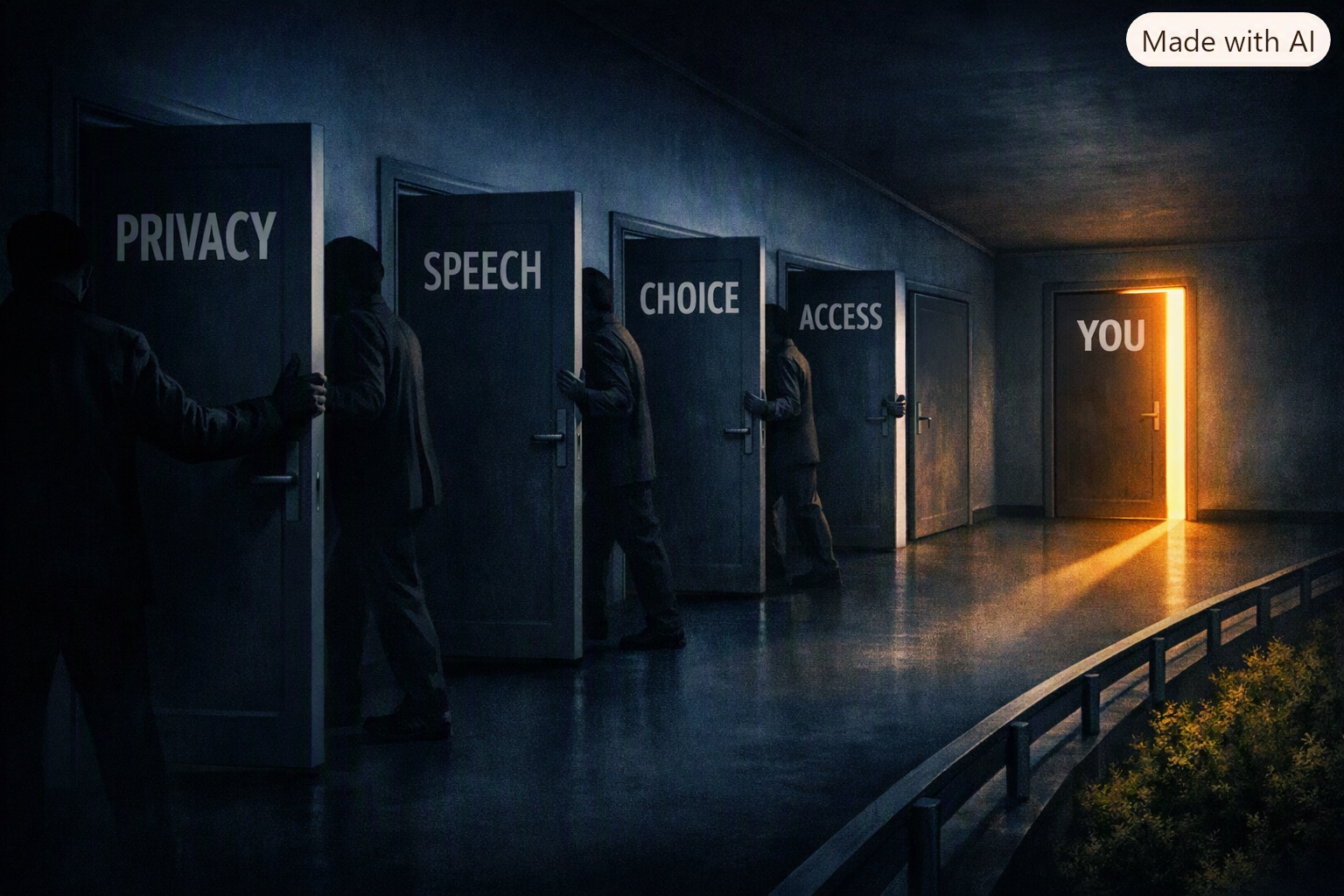
Which means the way out can work the same way.
One choice at a time.
Try another browser.
Support another engine.
Support another extension ecosystem.
Support the developers who build tools that put control back in the user's hands.
Not because Chrome is evil.
Not because Firefox is perfect.
But because choice is a feature.
The Short Version
If you remember nothing else, remember this:
MV3 isn't simply an argument about advertisements.
It's an argument about how much control extensions and users should have over what happens inside the browser.
MV3 still allows content blocking. But it changes the architecture and constrains some of the capabilities that made full uBlock Origin so powerful.
And when the dominant browser architecture changes, everyone on the web eventually feels the consequences.
You don't have to be a techie to care.
You just have to use the internet.
And that's pretty much all of us.
One Last Thing
The next time somebody tells you:
“It's just an ad blocker.”
Ask them a simple question:
“What happens when the thing doing the blocking is no longer allowed to see or control as much as it used to?”
Because the answer isn't just about advertisements.
It’s about the scripts that hijack clicks, the redirects that steal sessions, the overlays that fake downloads, the malware that hides behind banners.
It’s about who gets to define the boundaries of the browser.
And those boundaries define a surprisingly large part of the internet we experience every day.
Choose accordingly.